1

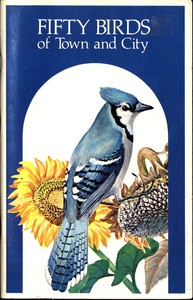
Fifty Birds of Town and City — Context and Discussion
(0 User reviews)
573
Project Gutenberg
2015
Not confirmed
Birds; Urban animals
Readers of public-domain and historical texts
Project Gutenberg digital edition
en
Edition facts
Words
9,977
Reading time
44 min
Text sections
2
The catalog record for Fifty Birds of Town and City — Context and Discussion provides practical reading context through 9,977 words, 44 min estimated reading time, and 2 detected text sections.
The text analysis averages about 20.8 words per sentence, while the detected sections provide another way to judge how the source is divided.
Project Gutenberg metadata also associates the work with “Birds,” connecting these edition facts with the source record’s subject description.
Source:
Project Gutenberg record #50321
An editorial note examining how Bob Hines and Peter A. Anastasi structure their bird guide around urban habitats, using recurring images of adaptation and movement between natural and built environments.
Read the complete public-domain text at its original source.
Read on Project GutenbergBob Hines and Peter A. Anastasi organize Fifty Birds of Town and City not by taxonomy but by the birds' relationship to human-altered landscapes. Each entry moves from a physical description to a behavioral note about how the species has adapted to—or been displaced by—towns and cities. The foreword frames this as a deliberate update to an earlier Bureau of Biological Survey booklet, shifting focus from farm and orchard to sidewalk and park. The structure itself becomes a quiet argument: that urban birds are not merely survivors but active cohabitants, their habits shaped by the same streets and buildings we inhabit.
From Farm to City: A Structural Shift
The foreword explicitly positions this book as a successor to “Fifty Common Birds of Farm and Orchard,” acknowledging that population shifts over six decades have rendered the earlier volume out of date. Where that guide assumed a rural readership, Hines and Anastasi target the urban dweller. The table of contents reinforces this: species like the pigeon, house sparrow, and starling—often overlooked or dismissed—are given equal weight alongside more celebrated birds. The structure implies that the city is not a degraded habitat but a distinct one, with its own cast of characters. The authors do not lament the loss of farmland; instead, they document what has taken its place.
Recurring Images: Ledges, Parks, and People
Across the excerpts, certain images recur: building ledges, park benches, statues, and the people who feed pigeons. The pigeon entry notes that the bird is “often so populous as to be a nuisance, fouling building ledges, park benches, statues, and occasionally people.” This is not a neutral observation—it acknowledges friction. Yet the same paragraph calls the pigeon “probably the one most familiar and recognizable to the urban dwellers,” suggesting that familiarity breeds not contempt but a kind of reluctant intimacy. The robin, too, is described as “friendly and trusting in cities and towns, and wild and distrustful of man when living in wilderness areas.” The city, in this book, is a place where birds learn to tolerate humans, and vice versa.
Movement Between Scenes: Migration and Daily Flights
The entries frequently note migration patterns and seasonal movements, but they also track smaller-scale movements: from tree to feeder, from rooftop to park. The red-eyed vireo is “seen in deciduous trees in city parks during migration,” a brief stopover in a longer journey. The purple martin, once a cavity-nester in wild districts, now “adopted domestic habits” and requires apartment houses erected by humans. The ruby-throated hummingbird is described as “capable of incredible flight, moving in any direction on wings vibrating faster than sight.” These descriptions emphasize motion—birds are not static objects to be identified but creatures in constant transit, crossing the boundaries between wild and built, seasonal and permanent.
The Human Role in Habitat
Several entries explicitly instruct the reader on how to attract or accommodate birds. The purple martin section advises erecting “apartment houses” 15 feet off the ground, protected from cats and other birds. The hummingbird entry suggests “tubes of sugar water properly hung.” These are not mere facts; they are invitations to participate. The foreword reinforces this: the Secretary of the Interior writes that these birds “can live in our towns and cities so long as you help provide the healthy habitat they need.” The book’s structure thus moves from observation to action, from identifying a bird to creating conditions for its continued presence. The reader is positioned not as a passive viewer but as a steward of shared space.
Readers approaching Fifty Birds of Town and City will find a guide that rewards attention to its framing as much as to its species accounts. The book’s quiet insistence on human responsibility—and its refusal to romanticize either nature or the city—makes it a useful companion for anyone who has watched a pigeon on a ledge and wondered at the negotiation between species. The entries are brief, but the cumulative effect is a portrait of urban ecology as a dynamic, co-created space.
There’s a moment in Fifty Birds of Town and City where a sparrow’s flight between a wire and a ledge feels less like escape and more like a familiar habit. It made me think of how old natural histories spoke of animals as if they carried their own small homelands. That same tender patience lives in Stories of the Universe: Animal Life — Themes and Context, where every creature’s restlessness is quietly framed as belonging.
There are no reviews for this eBook.
There are no comments for this eBook.
Reader reflection
Before you leave, reflect on the book
Use these questions to collect your thoughts before moving on.
Your progress
0
/
10
2
How much did you enjoy the reading experience?
3
Is this a title you would suggest to others?
4
What was the reading difficulty like?
5
Did any part of the book feel personally relevant?
6
Did the story or argument move comfortably?
7
How useful did the reading feel?
8
Could you see yourself revisiting this book?
9
Which lesson or insight stayed with you?
10