1

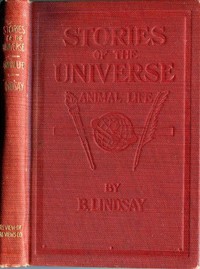
Stories of the Universe: Animal Life — Themes and Context
(0 User reviews)
924
Project Gutenberg
2012
Not confirmed
Animals; Zoology
Readers of public-domain and historical texts
Project Gutenberg digital edition
en
Edition facts
Words
47,421
Reading time
207 min
Text sections
7
The catalog record for Stories of the Universe: Animal Life — Themes and Context provides practical reading context through 47,421 words, 3 hr 27 min estimated reading time, and 7 detected text sections.
The text analysis averages about 21.5 words per sentence, while the detected sections provide another way to judge how the source is divided.
Project Gutenberg metadata also associates the work with “Animals,” connecting these edition facts with the source record’s subject description.
Source:
Project Gutenberg record #40362
An early 20th-century natural history survey that examines animal anatomy, classification, and adaptation through detailed descriptions of specimens, with a focus on marine invertebrates like scallops and their shell morphology.
Read the complete public-domain text at its original source.
Read on Project GutenbergB. Lindsay's Stories of the Universe: Animal Life (1902) opens not with a general definition of life but with a specific claim: without the microscope, the story of animal life would remain untold. The book proceeds to examine animal anatomy, classification, and adaptation through concrete examples, often dwelling on marine invertebrates. The frontispiece—a photograph of scallop shells from Douglas, Isle of Man, and Llandudno, North Wales—signals the author's reliance on museum specimens and personal collections, many photographed by the publisher. The preface credits Miss E. C. Abbott for most diagrams and acknowledges the South Kensington Museum of Natural History. This is a work grounded in observable, physical evidence rather than abstract theory.
Scallop Shells as a Case Study in Form and Function
The excerpt on the scallop (Pecten opercularis) demonstrates Lindsay's method: close observation of a single shell yields lessons in anatomy, locomotion, and classification. The author explains that the shell's radiating ridges are unusual among bivalves, which more commonly show concentric markings. The "ears" of the shell—three triangular and one "nondescript"—are likened to dog-ears in books, a homely comparison that grounds technical description in everyday experience. The byssal notch, through which the animal spins anchoring threads, is identified as a functional feature shared with the common sea-mussel.
Lindsay then describes how the scallop swims by contracting its mantle to expel water, propelling itself backward. The shell's ears form a straight, strong edge that cuts the water like a ship's prow, enabling swift, zigzag motion. A quotation from the Rev. D. Landsborough, observing young specimens in a tidal pool, reports that "one jerk carried them some yards." The eyes, situated on the mantle fringe near the wide end of the shell, allow the scallop to back away from enemies instantly. This integration of structure, behavior, and environment is typical of the book's approach.
Classification Through Concrete Detail
The catalog subjects list "Animals" and "Zoology," but the excerpts reveal a strong emphasis on classification via physical traits. Lindsay discusses the hinge "teeth" of bivalve shells, noting that the scallop lacks such interlocking projections—a feature shared with oysters and the freshwater mussel Anodonta ("the Toothless One"). The author remarks that this absence often puzzles beginners, who ask whether bivalves ever have true teeth. The answer is no: the "teeth" are shell-hinge structures, not oral ones.
This attention to diagnostic features recurs throughout the table of contents, which includes chapters on Protozoa, Coelenterata, Sponges, Worms, Arthropoda, Mollusca, Brachiopoda, Polyzoa, Echinodermata, Chordata, Vertebrata, and Man. The final chapter, "How Zoologists do their Work," suggests a meta-level reflection on the practice of classification itself. The excerpts do not show whether Lindsay discusses evolutionary relationships or merely morphological groupings, but the focus on observable characters aligns with early 20th-century natural history.
The Role of Illustration and Specimen
Forty-seven illustrations accompany the text, many from specimens in the South Kensington Museum or from the author's own collection. The frontispiece caption specifies the geographic origins of the scallop shells, indicating a concern for provenance. The preface notes that some figures are diagrammatic, while others are photographs. The excerpt on scallop anatomy refers to a photograph that shows the hinge-ligament and valve differences but cannot reveal muscular impressions—a limitation the author acknowledges explicitly.
This interplay between image and text is central to Lindsay's pedagogy. The description of the scallop's ears, for instance, relies on the reader's ability to see the photograph. When the author writes that "the inside of the shell shows muscular impressions, but these cannot be seen in a photograph," the reader is reminded that illustrations are partial representations. The book thus trains its audience to observe specimens directly, using the text and images as guides rather than substitutes.
Readers approaching Stories of the Universe: Animal Life should expect a methodical, specimen-driven survey rather than a narrative of evolution or ecology. The book rewards attention to anatomical detail and to the author's frequent asides about the challenges of observation and classification. The final chapter on zoological methods may offer insight into how Lindsay conceives of the naturalist's craft. For those interested in early 20th-century popular science, this work provides a clear window into the priorities and techniques of the period.
Some evenings I linger over the scallop’s shell, its quiet ridges like a patient memory. Then my hand finds the thin volume on the wood rat, a neighbor to that same patience, small bones and fur under Colorado light. Both speak of the world’s particular, modest details, and I hold them together, admiring. A New Subspecies of Wood Rat (Neotoma mexicana) from Colorado — Reading Companion rests beside it, a fond whisper of kinship.
There are no reviews for this eBook.
There are no comments for this eBook.
Reader reflection
Take a moment to reflect on this book
Create a short personal record of your experience with this book.
Your progress
0
/
10
2
Did this book hold your interest?
3
Is this a title you would suggest to others?
4
How demanding did the text feel?
5
Did the book give you something worth debating?
6
Is this a title worth rereading?
7
Did the story or argument move comfortably?
8
How clear did the writing feel?
9
In one sentence, what did you learn?
10