1

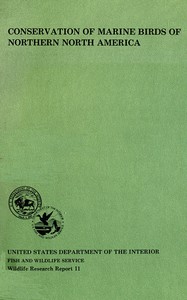
Conservation of marine birds of northern North America: papers from the international symposium held at the Seattle Hyatt House — A Reader’s Guide
(0 User reviews)
1228
Project Gutenberg
2015
Not confirmed
Sea birds -- North America -- Congresses; Sea birds -- Northwest, Pacific -- Congresses; Birds -- Conservation -- North America -- Congresses; Birds -- Conservation -- Northwest, Pacific -- Congresses; Birds -- North America -- Congresses; Birds -- Northwest, Pacific -- Congresses
Readers of public-domain and historical texts
Project Gutenberg digital edition
en
Edition facts
Words
153,405
Reading time
667 min
Text sections
41
The catalog record for Conservation of marine birds of northern North America: papers from the international symposium held at the Seattle Hyatt House — A Reader’s Guide provides practical reading context through 153,405 words, 11 hr 7 min estimated reading time, and 41 detected text sections.
The text analysis averages about 17.6 words per sentence, while the detected sections provide another way to judge how the source is divided.
Project Gutenberg metadata also associates the work with “Sea birds -- North America -- Congresses,” connecting these edition facts with the source record’s subject description.
Source:
Project Gutenberg record #49335
This 1979 symposium volume examines the conservation of seabirds in northern North America, with papers on climate cycles, sea ice, population status, and the vulnerability of species with low reproductive rates. Editors Bartonek and Nettleship compile research emphasizing the need for time-energy studies and knowledge of year-round distributions.
Read the complete public-domain text at its original source.
Read on Project GutenbergThe symposium that produced this volume convened in Seattle in May 1975, bringing together researchers working across the northern Pacific and Arctic coasts. The papers collected here reflect a field still grappling with fundamental unknowns: as one contributor notes, 'ignorance is vast' regarding where different age groups of seabirds spend the non-breeding season. The volume is dedicated to four Fish and Wildlife Service biologists and a pilot who died in a 1974 aerial survey crash in the Gulf of Alaska, and to a Norwegian professor who perished during similar surveys in 1976—a stark reminder of the logistical challenges that shaped early seabird research.
Climate and Ice as Shaping Forces
Several papers treat environmental cycles as primary drivers of seabird distribution. M. T. Myres examines long-term climatic and oceanographic cycles, arguing that these regulate numbers and ranges at scales beyond annual weather. George J. Divoky focuses on sea ice in the Beaufort, Chukchi, and Bering Seas, treating ice not merely as a physical barrier but as a dynamic habitat that influences feeding and breeding opportunities. The volume’s structure places these broad environmental chapters first, establishing a framework for the species-specific and regional studies that follow.
Low Reproductive Effort, High Vulnerability
A recurring argument across multiple papers is that seabirds are ill-equipped to recover from population crashes. One contributor emphasizes that seabirds have 'low annual reproductive effort geared to a world in which there is slow turnover in population,' making them unable to rebound quickly from disasters. The same author warns that providing excess food should not be expected to improve breeding performance in experienced birds, and that seabirds are easily disturbed during breeding attempts. These observations are presented as tentative, with the caveat that conclusions 'may not apply equally to all seabird species.'
Gaps in Knowledge and Calls for Integrated Research
The volume repeatedly acknowledges how much remains unknown. One paper quotes Bourne (1963) listing needs: study of the period after fledging, behavior and survival in the immature period, molting seasons and ranges, and distribution of different age groups. The author notes that while breeding biology of some northwestern species is now better understood, scientists remain 'largely ignorant' about year-round locations of different age classes. The proposed remedy is to combine studies of annual cycles and movements with resource analysis—not just diet composition, but where food is available, how hard it is to catch, and what nutritional return it provides.
Readers approaching this volume should expect a research report rather than a popular natural history. The papers are dense with data, references, and cautious inference. The editors have organized the material to move from broad environmental context to population status to specific management concerns, but the overall tone is one of acknowledged uncertainty. For those interested in the history of seabird conservation science, this collection captures a moment when researchers were systematically identifying what they did not yet know.
This symposium’s talk of low reproductive rates and fragile sea ice reminded me of my grandfather’s old ledger, where he noted guillemot arrivals each spring. That same patient worry surfaced years later while paging through the Birds of Guernsey (1879) And the Neighbouring Islands: Alderney, Sark, Jethou, Herm; Being a Small Contribution to the Ornitholony of the Channel Islands — Reading Companion, where the author’s quiet tally of vanished nests felt like a similar, softer ache.
There are no reviews for this eBook.
There are no comments for this eBook.
Reader reflection
Before you leave, reflect on the book
Use these questions to collect your thoughts before moving on.
Your progress
0
/
10
2
How much did you enjoy the reading experience?
3
How likely are you to recommend this book?
4
Did the language feel accessible?
5
Would you read this book again?
6
How useful did the reading feel?
7
Could you follow the author’s main argument?
8
Which aspect of the book did you value most?
9
What did this book teach you most?
10