1


Catalogue of British Columbia Birds — Reading Companion
(0 User reviews)
757
Project Gutenberg
2004
Not confirmed
Birds -- British Columbia
Readers of public-domain and historical texts
Project Gutenberg digital edition
en
Edition facts
Words
13,888
Reading time
61 min
Text sections
3
Catalogue of British Columbia Birds — Reading Companion can be approached with a clearer sense of reading commitment from its source measurements: 13,888 words, 1 hr 1 min estimated reading time, and 3 detected text sections.
The text analysis averages about 9.9 words per sentence, while the detected sections provide another way to judge how the source is divided.
Project Gutenberg metadata also associates the work with “Birds -- British Columbia,” connecting these edition facts with the source record’s subject description.
Source:
Project Gutenberg record #6329
Francis Kermode's 1904 catalogue lists 363 bird species and subspecies proven in British Columbia, with distribution notes from coastal and interior observers, revealing uneven survey coverage and reliance on a small network of contributors.
Read the complete public-domain text at its original source.
Read on Project GutenbergFrancis Kermode, curator of the Provincial Museum in Victoria, opens his 1904 Catalogue of British Columbia Birds with a frank admission: the list is incomplete, especially for the north and northeastern interior, which he calls “a valuable field for work.” The catalogue updates John Fannin’s 1898 list of 339 species by adding 24, drawing on specimens and notes from a handful of named observers—A. C. Brooks, Rev. J. H. Keen, Thomas Kermode, E. P. Venables, and Charles de Blois Green. Their contributions are cited throughout, giving the work a collaborative texture.
A Network of Observers
Kermode repeatedly attributes sightings to specific individuals, creating a patchwork of local knowledge. A. C. Brooks appears most often, reporting from Chilliwhack, Okanagan, and Cariboo. Rev. J. H. Keen supplies records from the Queen Charlotte Islands and Metlakatla. The entries for the American Red-necked Grebe, for instance, combine Brooks’s note that it winters on Okanagan Lake, Keen’s judgment that it is “not common at Metlakatla,” and Fannin’s observation that it breeds on lakes along the Cariboo Road. This method makes the catalogue a record of who knew what, as much as a list of birds.
Coast vs. Interior: A Recurring Pattern
Many entries draw a sharp line between the coast and the interior. The Northwestern Red-wing is “common west of Cascades, on Mainland and Vancouver Island,” while the San Diego Redwing is found “east of Cascades.” The Western Evening Grosbeak is “chiefly on the Mainland,” reaching Vancouver Island only in winter. The Gray-crowned Leucosticte is noted in the “Rocky Mountain district,” with winter occurrences elsewhere. These geographic distinctions are not merely descriptive; they reflect the state of field knowledge in 1904, with the coast better surveyed than the interior.
Gaps and Uncertainties
Kermode does not hide what he does not know. The entry for the Rusty Blackbird is based on a single specimen shot at Metlakatla in 1901. The Pacific Loon is “not common; one specimen ta[ken]” (the text breaks off). The Blue Crow entry quotes Coues’s Key to N. A. Birds rather than firsthand observation. For the Yellow-headed Blackbird, Kermode writes “I have heard of it at Vernon,” relying on hearsay. These admissions of rarity or uncertainty give the catalogue an honest, provisional character, reminding readers that it is a snapshot of incomplete knowledge.
Readers should approach this catalogue as a historical document of ornithological practice in early-twentieth-century British Columbia. The entries reward attention to the named observers and the geographic qualifiers—east or west of the Cascades, coast or interior, common or rare. The work’s value lies not only in its species list but in the way it records the limits of what was known, and by whom.
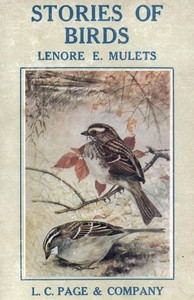
I kept thinking about those 363 birds, how one network of observers shaped what we know—and it reminded me of the quiet gaps in every map we carry. A friend once lent me Stories of Birds — Themes and Context, and it sat with me the same way: not filling the emptiness, just making it feel honest and held.
There are no reviews for this eBook.
There are no comments for this eBook.
Reader reflection
How will you remember this book?
Save your reaction, strongest insight, and memorable passage.
Your progress
0
/
10
2
How did the book work for you overall?
3
Would you encourage someone else to read it?
4
How much effort did this book require?
5
Did any part of the book feel personally relevant?
6
How useful were the ideas in this book?
7
Which element worked best for you?
8
How clear did the writing feel?
9
What changed or sharpened your thinking?
10