1

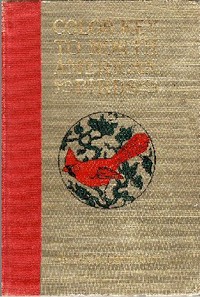
Color Key to North American Birds with bibliographical appendix — Reading Notes
(0 User reviews)
84
Project Gutenberg
2011
Not confirmed
Birds -- North America
Readers of public-domain and historical texts
Project Gutenberg digital edition
en
Edition facts
Words
116,091
Reading time
505 min
Text sections
26
For Color Key to North American Birds with bibliographical appendix — Reading Notes, the stored edition analysis reports 116,091 words, 8 hr 25 min estimated reading time, and 26 detected text sections.
The text analysis averages about 12.1 words per sentence, while the detected sections provide another way to judge how the source is divided.
Project Gutenberg metadata also associates the work with “Birds -- North America,” connecting these edition facts with the source record’s subject description.
Source:
Project Gutenberg record #38003
This editorial note examines how Chapman's Color Key to North American Birds uses a tripartite structure—synopsis, color plates, systematic listing—to guide bird identification, with attention to the precise subspecies descriptions and the role of the index.
Read the complete public-domain text at its original source.
Read on Project GutenbergFrank M. Chapman's Color Key to North American Birds opens with a detailed index that maps the book's three major divisions: a synopsis of orders, color images, and a systematic listing. This tripartite structure, visible from the start, immediately signals that the work is designed for cross-referencing rather than linear reading. The index, which links order pages to synopsis, color, and systematic sections, invites the reader to navigate by visual or taxonomic interest.
Navigating the Three-Part Structure
The opening index lists orders from Pygopodes (grebes, loons, auks) to Passeres (perching birds), each with page numbers for synopsis, color images, and systematic listing. This design suggests that Chapman expects readers to move fluidly between a concise overview, a visual plate, and a detailed taxonomic entry. For instance, a reader curious about the Horned Lark subspecies can start with the synopsis, then turn to the color plate, and finally consult the systematic account for measurements and range. The index thus functions as a roadmap, emphasizing the book's utility as a field reference rather than a narrative.
Precision in Subspecies Descriptions
The excerpts from the systematic section reveal Chapman's meticulous approach to subspecies. For the Horned Lark (Otocoris alpestris), he lists multiple subspecies—Streaked, Scorched, Dusky, Sonoran, Montezuma, Island—each distinguished by subtle differences in coloration, streaking, and range. Descriptions use precise language: the Scorched Horned Lark is “nearly uniform pinkish brown above, back with only a few indistinct brownish streaks,” while the Montezuma has “no distinct blackish streaks above; back pale brownish edged with pinkish gray.” These details, paired with measurements (wing length) and geographic ranges, allow a reader to identify birds with confidence.
The Role of Color and Visual Cues
Although the excerpts do not include the color plates themselves, the text repeatedly references color as a primary identification tool. In the kingbird entries, for example, throat and belly colors are given in bold: “throat white, breast and belly yellow” for Couch Kingbird, “throat light gray spreading over breast to yellow belly” for Arkansas Kingbird. The systematic descriptions also note the presence or absence of a yellow crown-patch. These color cues, combined with the index's page numbers for color images, indicate that the visual plates are integral to the identification process, reinforcing the book's title as a “color key.”
Reading the Systematic Entries
The systematic entries follow a consistent pattern: common name, scientific name, measurements (length, wing), description of adult and young, notes on voice or behavior, and range. For the Arkansas Kingbird, Chapman notes “squeaky, rattling, rolling notes; a noisy bird,” while Cassin Kingbird is “less noisy.” These behavioral notes, though brief, add practical field guidance. The range descriptions often cite authorities (e.g., Oberholser for Horned Larks) and include seasonal movements. A first-time reader should pay attention to the abbreviations (e.g., “W.” for wing length) and the use of semicolons to separate clauses, as the entries are densely packed with information.
To make the most of this work, start with the index to locate a bird of interest, then move between the synopsis, color plate, and systematic entry. The systematic descriptions reward careful reading: note the precise color terms, measurements, and range details. Chapman's book is not a narrative but a tool—one that becomes more valuable the more it is used in the field or with specimens.
There are books we keep close not for what they say but for how they hold us. Chapman’s careful indices always felt like that—a quiet companion on slow mornings. It reminds me of wandering through Birds in Town & Village years later, finding the same patient wonder waiting there. Birds in Town & Village — Inside the Classic still sits near my window, and I’m glad.
There are no reviews for this eBook.
There are no comments for this eBook.
Reader reflection
Before you leave, reflect on the book
Use these questions to collect your thoughts before moving on.
Your progress
0
/
10
2
How much did you enjoy the reading experience?
3
Is this a title you would suggest to others?
4
How much effort did this book require?
5
How understandable was the text?
6
Would you like to discuss this book with someone?
7
Did the story or argument move comfortably?
8
Would you read this book again?
9
In one sentence, what did you learn?
10