1

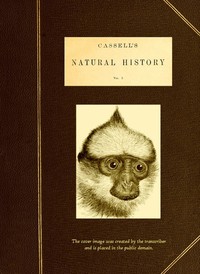
Cassell's Natural History, Vol. 1 (of 6) — Reading Companion
(0 User reviews)
323
Project Gutenberg
2017
Not confirmed
Animals; Animal behavior; Zoology
Readers of public-domain and historical texts
Project Gutenberg digital edition
en
Edition facts
Words
255,945
Reading time
1113 min
Text sections
48
For Cassell's Natural History, Vol. 1 (of 6) — Reading Companion, the stored edition analysis reports 255,945 words, 18 hr 33 min estimated reading time, and 48 detected text sections.
The text analysis averages about 27.4 words per sentence, while the detected sections provide another way to judge how the source is divided.
Project Gutenberg metadata also associates the work with “Animals,” connecting these edition facts with the source record’s subject description.
Source:
Project Gutenberg record #55660
This editorial note examines the language, narrative voice, and shifts in pace in Cassell's Natural History, Vol. 1, focusing on how the editors blend scientific description with vivid, anecdotal observations from field naturalists.
Read the complete public-domain text at its original source.
Read on Project GutenbergCassell's Natural History, Vol. 1, opens with a striking juxtaposition of formal taxonomic language and immersive field reportage. The editors, P. Martin Duncan, James Murie, and W. S. Dallas, frame the work as a comprehensive survey of mammals, yet the excerpts reveal a narrative voice that frequently shifts from detached classification to lively, almost travelogue-like accounts. One such account describes a group of scarlet-faced monkeys with 'very long, straight, and shining whitish hair' and 'faces glowed with the most vivid scarlet hue,' a passage that reads more like a naturalist's journal than a dry encyclopedia entry. This blend of registers—clinical Latin names alongside sensory, anecdotal detail—defines the volume's distinctive tone.
Scientific Precision and Sensory Detail
The text alternates between precise anatomical description and vivid, almost painterly observation. In the account of the Uakari monkey, the author notes dental specifics: 'the incisors being oblique, and in the upper jaw converging, so as to leave a gap between the outermost and the canine teeth.' Yet immediately before, the same creature is described with a naturalist's eye: 'Their heads were nearly bald, owing to the very short crop of thin grey hairs, and their faces glowed with the most vivid scarlet hue.' This duality—cold fact and warm observation—creates a rhythm that keeps the reader engaged. The editors do not shy from technical terms like 'pre-molar' or 'Cebidæ,' but they ground them in the living animal's appearance and behavior.
Narrative Voice: From Taxonomy to Tale
The narrative voice shifts markedly between sections. In the introductory material, the tone is authoritative and systematic, laying out classifications such as 'Old World and New World Monkeys.' But when the text turns to specific species, it adopts a first-person, anecdotal style. The passage on the scarlet-faced monkey includes a personal recollection: 'It was the first time I had seen this most curious of all the South American Monkeys.' This shift from omniscient editor to field naturalist gives the volume a layered perspective. The reader encounters both the synthesizing view of the editor and the immediate, sometimes perilous experiences of the collector, such as the detailed account of hunting with blow-pipes and Urari poison.
Pacing Through Procedural Detail
The pace of the prose varies dramatically, often slowing to dwell on procedural or behavioral minutiae. The description of capturing the Uakari monkey is a prime example: 'They run a considerable distance after being pierced, and it requires an experienced hunter to track them. He is considered the most expert who can keep pace with a wounded one, and catch it in his arms when it falls exhausted.' This passage unfolds almost like a hunting manual, with step-by-step actions and antidote instructions. Such detailed pacing contrasts with the brisk, summary style of taxonomic lists. The effect is a reading experience that alternates between rapid classification and slow, immersive narrative, mirroring the naturalist's dual role as cataloguer and witness.
Readers approaching this volume should attend to its shifts in register—from the formal language of scientific classification to the intimate, often tense voice of the field naturalist. The editors have woven together multiple sources and perspectives, creating a work that is as much about the practice of natural history as about the animals themselves. Pay particular attention to the passages where the narrative slows; these often contain the most vivid and culturally revealing details about the relationship between observer and observed.
Reading the anecdotal warmth in Cassell's Natural History, with its quiet blend of fact and field memory, I found myself drifting to a shelf-worn volume I once lingered over. The Living Animals of the World, Volume 1 (of 2) A Popular Natural History — Themes and Context holds that same unhurried, curious pulse, as if both editors were simply sharing a fireside observation of the wild, not lecturing. Their voices feel like old companions.
There are no reviews for this eBook.
There are no comments for this eBook.
Reader reflection
Record your reading impressions
A brief reflection can help important ideas stay with you longer.
Your progress
0
/
10
2
How did the book work for you overall?
3
How likely are you to recommend this book?
4
How demanding did the text feel?
5
Did this book create an emotional response?
6
What did you think about the pace?
7
Did it raise ideas you would like to talk about?
8
How original did the book feel?
9
What did this book teach you most?
10