1

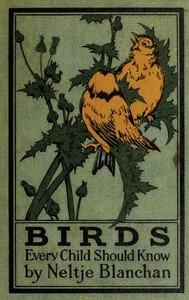
Birds Every Child Should Know — Text and Context
(0 User reviews)
1179
Project Gutenberg
2011
Not confirmed
Birds; Birds -- Juvenile literature
Readers of public-domain and historical texts
Project Gutenberg digital edition
en
Edition facts
Words
56,540
Reading time
246 min
Text sections
11
This digital edition of Birds Every Child Should Know — Text and Context is described by source-level measurements including 56,540 words, 4 hr 6 min estimated reading time, and 11 detected text sections.
The text analysis averages about 23.5 words per sentence, while the detected sections provide another way to judge how the source is divided.
Project Gutenberg metadata also associates the work with “Birds,” connecting these edition facts with the source record’s subject description.
Source:
Project Gutenberg record #38233
Neltje Blanchan's 1907 bird guide for children uses vivid descriptions and behavioral anecdotes to introduce common North American species, emphasizing ear-training and outdoor observation over dry facts.
Read the complete public-domain text at its original source.
Read on Project GutenbergBlanchan opens her preface with a sensory scene: a child roused from sleep by a robin's call or a chipping sparrow's tremulo. This emphasis on listening—training the ear to distinguish songs, alarm notes, and distress caws—sets the book apart from a simple identification manual. The author repeatedly frames bird study as joyful physical activity: long tramps, fence jumping, brook wading, and tree climbing. The structure moves from general encouragement to species-by-species portraits, each blending physical description, voice, nesting habits, and often a moral or humorous observation. The red-winged blackbird entry, for instance, notes its "sweet o-ka-lee" call and its sudden July indifference to family, a behavioral shift that Blanchan highlights with mild surprise.
Recurring Images of Sound and Movement
Throughout the excerpts, sound is the primary entry point. The preface describes a child who "hears every sound and puzzles out its meaning." Species accounts consistently render calls in phonetic spelling: the red-wing's "Ke, kong-ker-ee," the meadowlark's flute-like notes. Movement is equally emphasized—the red-wing circles on "fluttering wings" above sedges, the cowbird "sneaks about the woods and thickets." Blanchan often pairs a bird's voice with its characteristic motion, creating a double anchor for identification. The rusty blackbird's seasonal color change from glossy black to rusty is tied to its migration pattern, linking visual change to movement through space.
Structure: From General to Specific, with Moral Asides
The book's organization is straightforward: a preface on the value of bird study, then individual species accounts. But within each account, Blanchan follows a loose pattern: physical description, song, nesting, and often a pointed comment on behavior. The cowbird entry is the clearest example—after describing its parasitic nesting, she asks, "wouldn't you peck holes in that egg?" This rhetorical device turns natural history into a moral lesson. The red-wing's account similarly judges: its early devotion is "excessive," its later indifference "strange conduct." These asides give the text a conversational, slightly opinionated tone, as if a knowledgeable aunt is sharing gossip about the birds.
Movement Between Scenes: Marsh, Field, and Woodlot
Blanchan moves her reader through distinct habitats, often within a single paragraph. The red-wing entry begins in the marsh with pussy willows and peeping frogs, then shifts to the farmer's fields where the birds eat grain and insects. The cowbird is found in "woods and thickets," then its eggs appear in the nests of warblers, vireos, and thrushes across varied terrain. This quick scene-shifting mirrors the child's own movement—running from orchard to woods to brook. The book implicitly teaches that birds are not isolated specimens but actors in a landscape. The meadowlark, called "Old-field Lark," ties a species to a specific human-altered habitat, reinforcing the connection between observation and place.
Voice and Audience: The Child as Active Listener
Blanchan directly addresses the child reader with second-person imperatives: "When you are looking for the first pussy willows... you will, no doubt, become acquainted." The preface frames the child as a protagonist who "dashes out of the house to chase away a prowling cat" upon hearing an alarm note. This active, embodied listener is contrasted with "grown-ups" who "have ears who hear not." The book's voice is enthusiastic but precise, mixing scientific observation with colloquial asides. The cowbird is called a "grafter" with a "cold heart"; the red-wing's song is "rich, liquid, sweet." This blend of accuracy and personality makes the text feel like a field companion rather than a textbook.
Readers will find that Blanchan's book rewards attention to its recurring patterns: the way each bird is introduced by sound, the quick shifts between habitats, and the author's willingness to judge behavior. The excerpts suggest a work that values keen observation over exhaustive coverage. For the best experience, read a few entries at a time, letting the phonetic songs and habitat details build a mental map of the birds' world.
I’ve often thought Blanchan’s little book teaches patience, not just birdsong, and that patience finds its quietest echo in the careful pages of The Subspecies of the Mountain Chickadee — Themes and Context. One hears a single call, the other maps its tiny variations—yet both listen with the same fond, unhurried ear.
There are no reviews for this eBook.
There are no comments for this eBook.
Reader reflection
What was your reading experience?
Capture what you thought, learned, and would like to remember.
Your progress
0
/
10
2
Was reading this book enjoyable?
3
Is this a title you would suggest to others?
4
Did the language feel accessible?
5
Did the book give you something worth debating?
6
How would you rate its originality?
7
How clearly were the main ideas presented?
8
Would a second reading be valuable?
9
In one sentence, what did you learn?
10