1

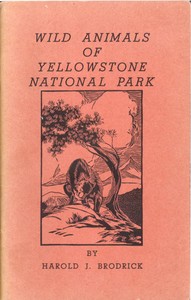
Wild Animals of Yellowstone National Park — Reading Companion
(0 User reviews)
822
Project Gutenberg
2019
Not confirmed
Animals -- Yellowstone National Park; Mammals -- Yellowstone National Park
Readers of public-domain and historical texts
Project Gutenberg digital edition
en
Edition facts
Words
20,207
Reading time
88 min
Text sections
4
The source record for Wild Animals of Yellowstone National Park — Reading Companion measures this digital text at 20,207 words, 1 hr 28 min estimated reading time, and 4 detected text sections.
The text analysis averages about 20.2 words per sentence, while the detected sections provide another way to judge how the source is divided.
Project Gutenberg metadata also associates the work with “Animals -- Yellowstone National Park,” connecting these edition facts with the source record’s subject description.
Source:
Project Gutenberg record #60132
A 1954 handbook on Yellowstone's mammals, structured by species with habitat notes, behavioral observations, and identification details, emphasizing where and when to see each animal.
Read the complete public-domain text at its original source.
Read on Project GutenbergHarold J. Brodrick's handbook, first published in 1952 and revised in 1954, opens with a clear purpose: to provide visitors with "a few facts about the more commonly seen mammals of Yellowstone." The book is organized as a series of species accounts, each following a consistent pattern: a general description, specific "Where found" locations, and behavioral notes. This structure reflects the author's dual aim—helping readers identify animals and guiding them to likely viewing spots. The text moves from the largest mammals, such as bison and elk, to smaller ones like beaver and otter, with each entry balancing scientific detail with practical advice.
A Pattern of Species Accounts
Each species entry in the book follows a predictable template, making it easy to compare animals. The author begins with a general description, often noting size, color, and distinctive features—for example, the beaver is described as "largest of the North American rodents, stocky, with webbed hind feet and broad, flat, scaly tail." Then comes a "Where found" section that pinpoints specific park locations, such as "beaver ponds in Willow Park, or along Pelican Creek." Finally, behavioral notes add color: otters "are playful and are in the habit of making slides down steep clay-banks or snowdrifts." This repetition of structure gives the book a reference-like quality, though the prose remains accessible.
Movement Between Scenes
The book frequently shifts between broad landscape views and close-up animal behavior. In the beaver entry, the text moves from the animal's engineering—"cut down and trim the trees for construction material"—to a specific detail: the tail slap as "an excellent warning signal." Similarly, the otter account jumps from its swimming prowess to its playful sliding, then to denning habits. These shifts mirror the experience of a park visitor scanning a meadow, then focusing on a single creature. The author also contrasts common myths with observed facts, noting that beavers do not use their tails as trowels, and that tree-felling is "not premeditated."
Recurring Images of Water and Banks
Water appears as a constant backdrop. Beavers are described in ponds and streams, otters near "suitable streams, lakes or ponds," and many other species are linked to aquatic habitats. The bank or shoreline recurs as a key setting: beavers dig "a sloping tunnel into the bank of a stream," otters den "near the water, either as a burrow in a bank or under protecting tree roots." Even the otter's slide ends "in the water with a loud splash." This repeated imagery reinforces the centrality of Yellowstone's waterways to wildlife viewing, and the book often advises evening visits for best sightings near water.
Practical Guidance for the Visitor
Brodrick frequently addresses the reader directly, offering tips on where and when to see animals. The beaver entry notes "the best time to see beaver is in the evening" and cautions that they "change their locations frequently." The otter is described as "a rather friendly fellow, fairly easily tamed and observed." These practical notes are woven into the natural history, not separated into a guide section. The book also includes a preface stating its aim: to help people "enjoy the pleasures of watching these animals and observing their interesting behavior." This reader-aware tone distinguishes the handbook from a dry field guide.
Readers approaching this booklet should treat it as a period piece of mid-century naturalist writing, grounded in firsthand observation rather than modern ecology. The species accounts reward browsing: each entry offers a compact mix of description, location, and behavior. Because the book focuses on commonly seen mammals, it serves as a practical companion for a park visit, though some scientific names and ranges may have changed since 1954. The consistent structure makes it easy to flip between entries, and the author's voice remains direct and unadorned.
Those Yellowstone pages taught me patience—how a creature shows itself only when you wait quietly. That same stillness lives in The Peacock 'At Home' AND The Butterfly's Ball AND The Fancy Fair — A Reader’s Guide, where butterflies and peacocks hold their small court without a single hurried step. Both volumes whisper the same secret: watch, breathe, and let the wildness come to you.
There are no reviews for this eBook.
There are no comments for this eBook.
Reader reflection
Before you leave, reflect on the book
Use these questions to collect your thoughts before moving on.
Your progress
0
/
10
2
How much did you enjoy the reading experience?
3
Would you recommend this book to another reader?
4
How much effort did this book require?
5
Did it raise ideas you would like to talk about?
6
Did this book create an emotional response?
7
Do you expect to return to this book?
8
Did you gain anything practical from the text?
9
In one sentence, what did you learn?
10