1

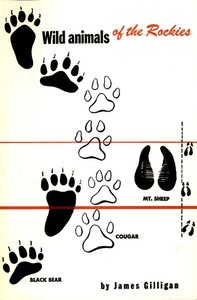
Wild Animals of the Rockies With a List of Mammals found in Rocky Mountain National Park — Reading Companion
(0 User reviews)
357
Project Gutenberg
2019
Not confirmed
Rocky Mountain National Park (Colo.); Mammals -- Colorado -- Rocky Mountain National Park -- Identification; Mammals -- Rocky Mountains -- Identification
Readers of public-domain and historical texts
Project Gutenberg digital edition
en
Edition facts
Words
15,366
Reading time
67 min
Text sections
3
Wild Animals of the Rockies With a List of Mammals found in Rocky Mountain National Park — Reading Companion can be approached with a clearer sense of reading commitment from its source measurements: 15,366 words, 1 hr 7 min estimated reading time, and 3 detected text sections.
The text analysis averages about 21.1 words per sentence, while the detected sections provide another way to judge how the source is divided.
Project Gutenberg metadata also associates the work with “Rocky Mountain National Park (Colo.),” connecting these edition facts with the source record’s subject description.
Source:
Project Gutenberg record #59885
James Gilligan's 1949 field guide to Rocky Mountain mammals blends concise species accounts with personal observation, emphasizing identification, behavior, and habitat. The text shifts between factual description and narrative anecdote, revealing the author's dual role as ranger-naturalist.
Read the complete public-domain text at its original source.
Read on Project GutenbergJames Gilligan's Wild Animals of the Rockies opens with a practical aim: to answer visitors' questions about identification, habits, and the challenges of spotting wildlife in rugged terrain. The preface, dated 1948, grounds the booklet in the author's experience as a ranger-naturalist in Rocky Mountain National Park, where a visitor study revealed a strong interest in four-footed animals. Gilligan's voice is direct and instructional, advising readers to sit quietly off-trail for hours—a method that prioritizes patience over pursuit. The text that follows is a compact guide, organized by taxonomic groups, with each species entry offering length, weight, and distinguishing marks. Yet the prose frequently shifts from dry fact to vivid anecdote, as when the author describes coyotes 'playing' with ground squirrels, flinging them into the air before gulping them down. This blend of field manual and personal observation gives the booklet an informal, immediate quality.
From Checklist to Narrative
The booklet's structure mirrors a naturalist's notebook: a table of contents lists species under categories like 'Hoofed Animals' and 'Flesh-eaters,' but the entries themselves vary in tone. Some are terse, offering only measurements and range; others expand into small stories. The coyote entry, for instance, moves from a description of its 'yellowish gray coat' and 'heavy tail' to a discussion of its adaptability and a first-person account of watching it toy with prey. This shift from objective catalog to personal recollection is a recurring pattern. The badger, described as 'compact, tough,' is noted for its ability to dig out of sight in minutes—a detail that feels both factual and evocative. The cross fox, a color phase of the red fox, is mentioned almost in passing, with the note that one litter may contain several varieties. These moments of narrative expansion break the rhythm of the checklist, suggesting the author's deeper engagement with the animals he observed.
Voice and the Observer's Presence
Gilligan's first-person voice appears sparingly but tellingly. In the coyote entry, he writes, 'I have seen coyotes in many of the lower valleys of the Park in mid-morning hours.' This direct observation lends authority and immediacy. Similarly, the preface recounts a visitor study, positioning the author as a mediator between the public and the wild. The language is plain—'Looks somewhat like a German shepherd dog'—but occasionally shifts into a more literary register: the coyote's howl 'floating out of a moonlight night.' The red fox is 'regarded as uncommon,' a phrase that hints at local knowledge. The author's presence is felt most strongly in the advice to sit quietly, a method that implies trust in the animals' natural behavior. This voice, at once scientific and anecdotal, gives the booklet a hybrid character: part identification guide, part field journal.
Pace and the Rhythm of Description
The pace of the prose varies noticeably between species. Longer entries, like those for elk or mountain sheep, are not included in the excerpts, but the carnivore accounts show a clear pattern. The coyote entry is expansive, covering appearance, behavior, diet, and reproduction in a flowing paragraph. In contrast, the striped skunk is dispatched in a few lines: 'stout bodied animal about the size of a house-cat,' with a note on its nocturnal habits and potent scent. The marten, mink, and weasel are grouped together, their entries brief and comparative. This uneven pacing reflects the author's priorities: common or charismatic animals receive fuller treatment, while less conspicuous species are summarized. The effect is a guide that feels responsive to the landscape it describes—lingering where there is more to say, moving quickly where the animal is rarely seen. The reader is left with a sense of the author's own attention, shifting from the dramatic to the routine.
Gilligan's booklet is best approached as a period piece of mid-century natural history writing, where scientific classification coexists with personal encounter. Readers interested in the evolution of field guides will note how the author balances brevity with anecdote, and how his voice emerges in unexpected places. For those planning a visit to Rocky Mountain National Park, the text offers a historical baseline for species presence and behavior, though modern readers should consult current sources for updated ranges and conservation status. The identification plates and track illustrations, mentioned in the preface, are not included in this digital edition, but the prose itself provides a vivid entry into the world of the Rockies' mammals.
There are books that sit beside you long after you close them, and Gilligan's little guide felt that way—his quiet notes on marmots and pines lingering like a slow walk. I keep thinking of how he noticed small habits, much like another old volume I found, The Cambridge natural history, Vol. 09 (of 10) — Edition Insights—both feel like a patient friend pointing at ordinary things until they seem extraordinary.
There are no reviews for this eBook.
There are no comments for this eBook.
Reader reflection
Take a moment to reflect on this book
Create a short personal record of your experience with this book.
Your progress
0
/
10
2
Was reading this book enjoyable?
3
Would you recommend this book to another reader?
4
How easy was the book to follow?
5
How useful were the ideas in this book?
6
How distinctive were its ideas or approach?
7
Did any part of the book feel personally relevant?
8
How would you describe its reading pace?
9
Which lesson or insight stayed with you?
10