
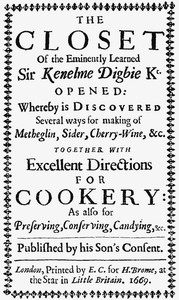
The Closet of Sir Kenelm Digby Knight Opened by Kenelm Digby
Let's clear something up right away: this isn't a normal cookbook. Published in 1669, after Sir Kenelm Digby's death, it's a chaotic, wonderful collection of over 800 recipes gathered from his incredible life. Think of it less as an instruction manual and more as a scrapbook from the 1600s.
The Story
There's no traditional plot. Instead, the 'story' is the journey through Digby's world. The book opens his private 'closet'—a kind of study-laboratory-pantry. One page tells you how to brew the perfect beer (with detailed notes on water quality). The next explains how to make a 'virtuous' paste to heal wounds or a sparkling cider 'fit for a prince.' You'll find the earliest written recipe for a bottled lemonade and elaborate instructions for 'Hypocras,' a spiced wine drink. It jumps from practical housekeeping to alchemical-like preparations, with Digby often noting who gave him the recipe, like a noble friend or a learned doctor. Reading it feels like listening to a brilliant, slightly distracted raconteur over a very strange dinner.
Why You Should Read It
I loved this book because it completely shatters our modern categories. We separate food, science, and medicine. Digby didn't. A recipe for mead involves observing fermentation like a chemist. A cure for scurvy is next to a method for preserving cherries. You get a raw, unfiltered look at how people really understood their world. It's also strangely humanizing. His notes on making the best toast (seriously) or his preferred method for boiling eggs connect us across centuries. You're not just learning how they cooked; you're seeing what they valued, what they feared (spoilage, illness), and how they celebrated.
Final Verdict
This one's for the curious minds. If you love history, but find dry timelines boring, this is your backstage pass. It's perfect for foodies who want roots deeper than a trendy restaurant, or for anyone who enjoys 'how-to' books from wildly different times. It's not a cover-to-cover read; it's a book to dip into, chuckle at, and be amazed by. Fair warning: you'll probably start looking at your own kitchen spices with a bit more wonder. A fascinating, delicious glimpse into the mind of the past.
There are no legal restrictions on this material. It serves as a testament to our shared literary heritage.
Daniel Gonzalez
9 months agoNot bad at all.
Sandra Scott
1 year agoI had low expectations initially, however the pacing is just right, keeping you engaged. Definitely a 5-star read.
Thomas Smith
1 year agoSolid story.
Andrew Perez
1 year agoHigh quality edition, very readable.






Mark Harris
10 months agoI didn't expect much, but the atmosphere created is totally immersive. Exceeded all my expectations.