
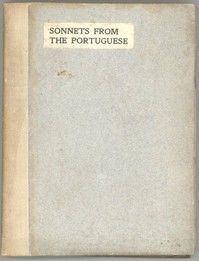
Sonnets from the Portuguese by Elizabeth Barrett Browning
Let's set the scene: England, 1845. Elizabeth Barrett is a celebrated poet, but she's also a semi-invalid, confined mostly to her room. Her father forbids all of his children from ever marrying. Life looks pretty settled, and lonely. Then, she gets a letter from a younger poet named Robert Browning, who admires her work. A correspondence begins, then secret visits. Against all odds—her health, her age, her father's rule—they fall in love. These 44 sonnets are Elizabeth's private chronicle of that journey, from disbelief to hesitant acceptance, to all-consuming passion.
Why You Should Read It
Look, I'm not always in the mood for 19th-century poetry, but this collection is different. It feels immediate. You're right there with Elizabeth as she argues with herself. In one poem she's listing all the reasons love is impossible for her; in the next, she's wondering how her life suddenly has color again. My favorite is Sonnet 43, the "How do I love thee? Let me count the ways" one. Hearing it at weddings is nice, but when you read it in context—knowing she wrote this for a secret, forbidden love—it crackles with a new, desperate energy. It's not a calm list; it's a woman trying to measure something infinite.
It's also a powerful record of a woman finding her voice and her strength through love. This isn't about being saved by a man; it's about being seen by him, and in that reflection, she sees a new version of herself worthy of a full life.
Final Verdict
Perfect for romantics, obviously, but also for anyone who's ever felt stuck or defined by their circumstances. If you're curious about classic poetry but intimidated, this is a fantastic place to start. The language is gorgeous but direct, and the real-life story behind it gives you a way in. It’s a short, intense, and incredibly moving read that proves the oldest emotions are often the freshest.
The copyright for this book has expired, making it public property. Distribute this work to help spread literacy.
Andrew Thomas
1 year agoThis is one of those stories where the arguments are well-supported by credible references. I learned so much from this.
Deborah Johnson
1 year agoA bit long but worth it.
Edward Nguyen
6 months agoNot bad at all.
Andrew Lewis
1 year agoTo be perfectly clear, the narrative structure is incredibly compelling. Absolutely essential reading.






Christopher Davis
3 months agoFive stars!