
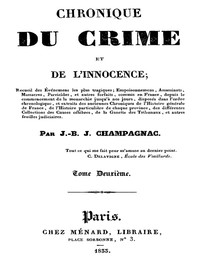
Chronique du crime et de l'innocence, tome 2/8 by J.-B.-J. Champagnac
Let's set the scene: France in the 1820s and 30s. The Napoleonic Wars are over, society is shifting, and crime reports in the newspapers are both sensational and sparse. Enter J.-B.-J. Champagnac, a writer and compiler who decided to create a massive, eight-volume record of the era's most notable crimes and legal dramas. This book, Chronique du crime et de l'innocence, Tome 2, is a deep dive into that archive. It's not one continuous story, but a series of case studies. You'll read about murders born from desperate love affairs, thefts spurred by extreme poverty, and shocking acts of violence that stunned communities. Champagnac presents the facts as they were known, often including courtroom dialogue and witness accounts, but he never stops there. He probes the social conditions, the personal motives, and the glaring flaws in the investigative process of the time.
Why You Should Read It
This is where the book truly shines. It's easy to look at old crime stories as mere historical curiosities, but Champagnac forces you to see the people. These aren't just names in a ledger; they're individuals caught in impossible situations. His focus on 'l'innocence'—innocence—is what sets this apart. He highlights cases of wrongful accusation, shoddy evidence, and prejudiced judges. Reading it, you'll find yourself getting angry on behalf of someone who lived 200 years ago, which is a powerful feeling. It connects our modern concerns about justice directly to the past. The writing, while formal in its time, is clear and driven by a genuine desire to understand, not just to shock.
Final Verdict
This book is a perfect match for a specific kind of reader. If you devour historical true crime podcasts like 'Noble Blood' or 'You Must Remember This,' you'll feel right at home. It's also fantastic for anyone interested in the social history of 19th-century Europe, offering a ground-level view that grand histories often miss. A word of caution: the descriptions can be blunt and the subject matter dark, as Champagnac doesn't sugarcoat the violence. But if you're looking for a read that is both intellectually engaging and emotionally gripping—a book that proves human nature and the struggle for justice haven't changed much—this hidden gem from the 1840s is waiting for you.
This publication is available for unrestricted use. It is now common property for all to enjoy.
Sarah Scott
4 months agoFinally found time to read this!
Sarah Thompson
2 years agoHigh quality edition, very readable.
John Johnson
11 months agoA bit long but worth it.
Kenneth Walker
1 year agoFive stars!






Jackson Walker
4 months agoText is crisp, making it easy to focus.