1

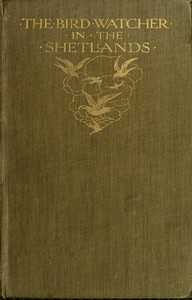
The Bird Watcher in the Shetlands, with Some Notes on Seals—and Digressions — Edition Insights
(0 User reviews)
956
Project Gutenberg
2016
Not confirmed
Birds -- Scotland -- Shetland; Seals (Animals)
Readers of public-domain and historical texts
Project Gutenberg digital edition
en
Edition facts
Words
108,303
Reading time
471 min
Text sections
15
The catalog record for The Bird Watcher in the Shetlands, with Some Notes on Seals—and Digressions — Edition Insights provides practical reading context through 108,303 words, 7 hr 51 min estimated reading time, and 15 detected text sections.
The text analysis averages about 30.3 words per sentence, while the detected sections provide another way to judge how the source is divided.
Project Gutenberg metadata also associates the work with “Birds -- Scotland -- Shetland,” connecting these edition facts with the source record’s subject description.
Source:
Project Gutenberg record #51429
Edmund Selous's 1905 journal of solitary bird and seal observation in Shetland, blending natural history with philosophical digressions on sin, knowledge, and the folly of human endeavor.
Read the complete public-domain text at its original source.
Read on Project GutenbergEdmund Selous prefaces this work by describing it as his unpolished journal, written day by day while living alone among the birds of Shetland. He chose to preserve its "unforced utterance" rather than artificialize it into a conventional book. The text thus offers a raw, immediate record of his second visit to the islands in 1902, where he spent hours watching not only birds but also seals—creatures he came to know intimately, though he admits "another man's soul is darkness."
Selous's willingness to let errors stand, even when later corrected, reveals a distinctive approach: he values the interest of mistakes and the pleasure of a well-turned description over strict accuracy. This editorial note examines the tensions between observation and reflection, solitude and companionship, and the deliberate roughness of the narrative voice.
The Journal as Unpolished Record
Selous explicitly frames his text as raw material, not a finished work. He writes that he was "taking elaborate pains to stereotype and artificialise what was, at any rate, as it stood, an unforced utterance and natural growth." This self-awareness shapes the reader's experience: the prose retains the spontaneity of field notes, with digressions and personal reflections woven into the natural history. The author's decision to "send it to press with this very negative sort of recommendation" underscores his commitment to authenticity over polish. Readers should expect a meandering, intimate account rather than a systematic treatise.
Solitude and Self-Doubt
Selous's isolation is palpable. He describes himself as "a fool" for coming to Shetland, suffering lumbago with little remedy, yet acknowledges that staying home would have brought its own regrets. This tension between hardship and desire recurs throughout the excerpts. He reflects on the universal folly of human choices, quoting Shakespeare's "this great stage of fools." The physical discomfort of solitary fieldwork becomes a springboard for broader philosophical musings on sin, knowledge, and the value of experience—whether bitter or sweet. The reader witnesses a mind grappling with its own motives and the meaning of its solitary pursuit.
Philosophical Digressions on Knowledge and Evil
Perhaps the most striking feature of these excerpts is Selous's extended meditation on sin and knowledge. He argues that evil is a misleading term, since actions like murder can be "good amongst bees" or in wartime. Knowledge of good and evil, he contends, is knowledge of conditions, gained through experience—even sinful experience. He speculates that a sinner may advance more quickly than a virtuous person who stagnates. These reflections, prompted by his physical discomfort and solitude, reveal a naturalist who sees moral questions as continuous with biological observation. The digressions are not mere asides but integral to his worldview, where watching birds and seals leads inexorably to questions of human nature.
Selous's book resists easy categorization: it is part field journal, part philosophical essay, part travelogue. Readers will find the most reward in attending to the interplay between precise natural observation and the author's restless, self-questioning mind. The digressions are not distractions but the very substance of his inquiry. Approach this text as a conversation with a solitary, thoughtful companion who is as interested in the meaning of his own presence on the cliffs as in the birds and seals he watches.
The rain drummed on the windowsill, and I remembered Selous’s lonely patience with the gulls. That same quiet, almost absurd insistence on watching one small thing until it reveals itself—his digressions on folly somehow echoing in the black dirt. The word “chipmunk” later surfaced, a tiny, precise answer to his grand questions, tucked in the dry pages of A New Chipmunk (Genus Eutamias) from the Black Hills — Themes and Context, and the afternoon felt measurably warmer.
There are no reviews for this eBook.
There are no comments for this eBook.
Reader reflection
Record your reading impressions
A brief reflection can help important ideas stay with you longer.
Your progress
0
/
10
2
What was your overall reaction to the book?
3
How likely are you to recommend this book?
4
How much effort did this book require?
5
What did you think about the pace?
6
Which part made the strongest impression?
7
Did you gain anything practical from the text?
8
How clear did the writing feel?
9
In one sentence, what did you learn?
10