
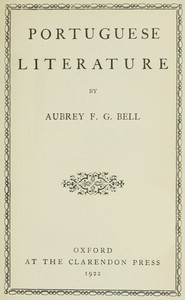
Portuguese literature by Aubrey F. G. Bell
Let's be honest, the title Portuguese Literature sounds like it could be a dusty textbook. But Aubrey Bell's work is something else. It's a guided tour, led by a writer who is clearly in love with his subject. He doesn't just list names and dates; he tries to show you the soul of a nation through its words.
The Story
There isn't a single plot, but there is a clear journey. Bell starts way back with the songs and stories that formed Portugal's early identity. He walks you through the big moments: the excitement of the Age of Discoveries, which infused writing with new worlds and ideas, and the later struggles under political repression. He introduces you to the major players—like the epic poet Luís de Camões, or the sharp, modern novelist Eça de Queirós—but he also champions lesser-known voices. The "story" is how this literature grew, faced challenges, and carved out its own unique space, separate from the bigger cultural shadows of Spain and France.
Why You Should Read It
You should read this because it opens a door. Bell writes with an enthusiasm that's contagious. He isn't a neutral professor; he's a fan making a case. When he describes a poem, you want to go find it. When he talks about the witty social observations in a novel, you add it to your mental list. He makes you see that Portuguese literature isn't a niche subject, but a missing piece in understanding European culture. The book is also a fascinating look at how one person, over a century ago, tried to build a bridge between cultures through sheer passion for the written word.
Final Verdict
This is the perfect book for curious readers who feel they've only seen part of the picture. If you love European history, world literature, or just discovering amazing authors no one else is talking about, Bell is your perfect, passionate guide. It's not a light beach read, but it's a surprisingly engaging and rewarding trip for anyone who believes there are always more great stories to find.
This text is dedicated to the public domain. Enjoy reading and sharing without restrictions.
Michael Robinson
1 year agoLoved it.
Ethan Gonzalez
1 year agoI didn't expect much, but the content flows smoothly from one chapter to the next. I learned so much from this.
John Anderson
5 months agoSurprisingly enough, the author's voice is distinct and makes complex topics easy to digest. A true masterpiece.
Sarah Perez
1 year agoWithout a doubt, the emotional weight of the story is balanced perfectly. A valuable addition to my collection.




Joshua Harris
1 year agoBased on the summary, I decided to read it and the flow of the text seems very fluid. A true masterpiece.