
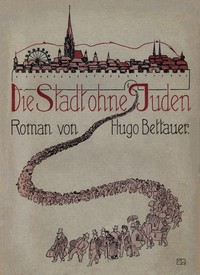
Die Stadt ohne Juden: Ein Roman von übermorgen by Hugo Bettauer
Let's talk about a book that's equal parts fascinating and frightening. Hugo Bettauer's 'The City Without Jews: A Novel of the Day After Tomorrow' is a piece of 1920s fiction that reads like a direct message to us today.
The Story
The plot is straightforward but powerful. In a Vienna of the near future, a rising political party taps into public frustration and blames the Jewish population for all the country's problems. They pass the 'Jew Removal Law,' and within months, every Jewish person is expelled. The city throws a party. People rejoice, believing their troubles are over.
But the victory is short-lived. Soon, the theaters fall silent because the best playwrights and actors are gone. Fashion becomes dull without Jewish designers. Banks struggle, universities empty, and the economy grinds to a halt. The city that was once vibrant becomes gray and poor. The story follows a few characters, including a non-Jewish politician who helped pass the law and a young man in love with a Jewish woman, as they witness their world becoming a hollow shell of itself.
Why You Should Read It
This isn't just a historical curiosity. Bettauer wrote this as a satirical warning, and the precision of his prediction is haunting. He shows how scapegoating isn't just morally wrong—it's practically stupid. A society that cuts out a vital part of itself becomes weaker, poorer, and less interesting. The book's strength is in showing the mundane consequences: the closed shops, the bad concerts, the missing doctors. It makes the loss tangible.
It's also incredibly brave. Bettauer published this in 1922, naming the dangerous ideologies already growing around him. Sadly, his warning went unheeded, and the author himself was later murdered by a Nazi supporter. Reading it, you feel the urgency in his words.
Final Verdict
This book is perfect for anyone interested in history, politics, or human nature. It's for readers who appreciate dystopian fiction like '1984' but want to see a version that tragically predated the real-life horror. It's short, accessible, and packs a serious punch. Don't go in expecting a complex character study; go in for a clear, alarming allegory that holds up a dark mirror to any society tempted by division. It's a vital, unsettling read that proves some stories need to be remembered.
This title is part of the public domain archive. Use this text in your own projects freely.
Karen Allen
1 year agoI stumbled upon this title and the flow of the text seems very fluid. Worth every second.
Sandra Miller
1 year agoTo be perfectly clear, the emotional weight of the story is balanced perfectly. Absolutely essential reading.
Thomas Miller
1 year agoWithout a doubt, the narrative structure is incredibly compelling. Definitely a 5-star read.
Mason Williams
1 year agoA bit long but worth it.
Anthony Lopez
1 year agoVery interesting perspective.