1

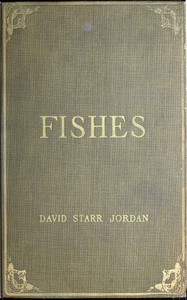
A Guide to the Study of Fishes, Volume 1 (of 2) — Reading Notes
(0 User reviews)
1055
Project Gutenberg
2014
Not confirmed
Zoology -- History; Fishes; Fishes -- Bibliography
Readers of public-domain and historical texts
Project Gutenberg digital edition
en
Edition facts
Words
185,111
Reading time
805 min
Text sections
27
A Guide to the Study of Fishes, Volume 1 (of 2) — Reading Notes can be approached with a clearer sense of reading commitment from its source measurements: 185,111 words, 13 hr 25 min estimated reading time, and 27 detected text sections.
The text analysis averages about 19.1 words per sentence, while the detected sections provide another way to judge how the source is divided.
Project Gutenberg metadata also associates the work with “Zoology -- History,” connecting these edition facts with the source record’s subject description.
Source:
Project Gutenberg record #46614
David Starr Jordan's 1905 ichthyology guide blends taxonomic detail with biogeographic reasoning, using mountain barriers and glacial history to explain fish distribution. The author's first-person observations and speculative language reveal a scientist shaping a nascent field.
Read the complete public-domain text at its original source.
Read on Project GutenbergDavid Starr Jordan opens this 1905 volume with a preface that positions the work as a synthesis of personal ichthyological experience and existing literature, acknowledging a network of colleagues who reviewed specific chapters. The dedication to Theodore Gill—'Ichthyologist, Philosopher, Critic, Master in Taxonomy'—signals the taxonomic emphasis that pervades the text. Jordan's voice is authoritative yet provisional, frequently using phrases like 'we may suppose' and 'I think' when discussing fish dispersal across mountain barriers, a rhetorical habit that reveals the speculative nature of early 20th-century biogeography.
Speculative Geographies: Mountains and Fish Movement
Jordan's discussion of fish distribution across North American mountain ranges is marked by careful qualification. He contrasts the 'considerable barrier' of Mount Shasta with the 'lower and irregular ridges' of the Coast Range, noting that the latter allow some species to pass via San Francisco Bay. The Alleghanies, he observes, are crossed by more species than the Rockies or Sierra Nevada, attributing this to their lower elevation and greater fragmentation. His language shifts between empirical observation—'the brook trout is found in all suitable waters from Hudson's Bay to the head of the Chattahoochee'—and hypothetical reconstruction: 'We may suppose the same agencies to have assisted these species that we have imagined in the case of the Rocky Mountain trout.' This interplay of data and inference characterizes the volume's approach to historical zoogeography.
The Role of Glacial Cold and Erosion in Species Transfer
Jordan invokes glacial history and geological processes to explain anomalous fish distributions. He suggests that 'the snow-fields of the Alleghany chain might have played some part in aiding the diffusion of cold-loving fishes' during colder periods, and points to local erosion as a mechanism: 'Probably the divide has been so shifted that some small stream with its fishes has been cut off from the Holston and transferred to the Roanoke.' He also considers cavern systems as potential conduits, though he doubts their efficacy across major ridges. These passages reveal a scientist reasoning from limited evidence, using plausible mechanisms to bridge gaps in the fossil record. The prose is methodical, but Jordan occasionally betrays enthusiasm, as when he describes the 'little red fallfish' found only in mountain tributaries of the Savannah and Tennessee.
Narrative Voice and the Shaping of Ichthyological Knowledge
Throughout the excerpts, Jordan's first-person presence is conspicuous. He writes 'I doubt whether the main chains of the Blue Ridge or the Great Smoky can be crossed in that way' and 'we may, I think, imagine a condition of things.' This personal tone, combined with the extensive acknowledgments in the preface, positions the book as a collaborative yet individual project. Jordan does not present his conclusions as settled; instead, he invites readers to consider possibilities. The chapter on fish distribution reads less like a definitive account and more like a working hypothesis, with Jordan testing ideas against the known fauna. This provisional quality, while a product of its time, gives the text a distinctive intellectual honesty and makes it a valuable document of early ichthyological methodology.
Readers approaching this volume should attend to Jordan's use of qualifying language—'likely,' 'probably,' 'we may suppose'—as markers of inference rather than certainty. The book rewards those interested in how scientists construct arguments from fragmentary data. Pay particular attention to the footnotes and species citations, which anchor Jordan's broader claims in specific observations. The volume's value lies not only in its taxonomic content but in its demonstration of a scientific mind at work, building a framework for understanding fish diversity through the interplay of geography, history, and morphology.
There’s something tender in how Jordan reads a fish’s range like a story written by ancient ice, speculating where rivers once ran. That same quiet wonder surfaces in Comparative Ecology of Pinyon Mice and Deer Mice in Mesa Verde National Park, Colorado — Background and Themes, where small creatures carry their own geography. I keep thinking how landscapes whisper through us all, patient as granite.
There are no reviews for this eBook.
There are no comments for this eBook.
Reader reflection
What was your reading experience?
Capture what you thought, learned, and would like to remember.
Your progress
0
/
10
2
How did the book work for you overall?
3
Would you pass this book on to a friend?
4
What was the reading difficulty like?
5
What was its emotional impact?
6
How well did it match your expectations?
7
Which element worked best for you?
8
How understandable was the text?
9
What changed or sharpened your thinking?
10




![Cover of The zoology of the voyage of H.M.S. Beagle [vol. 1 of 5] — A Reader’s Guide](https://siqeq.com/storage/media/covers/pg68925.jpg)
![Cover of The zoology of the voyage of H.M.S. Beagle [vol. 2 of 5] — Inside the Classic](https://siqeq.com/storage/media/covers/pg69577.jpg)