1


Social Life in the Insect World — A Closer Reading
(0 User reviews)
484
Project Gutenberg
2006
Not confirmed
Insect societies; Insects -- Behavior
Readers of public-domain and historical texts
Project Gutenberg digital edition
en
Edition facts
Words
95,013
Reading time
414 min
Text sections
9
For Social Life in the Insect World — A Closer Reading, the stored edition analysis reports 95,013 words, 6 hr 54 min estimated reading time, and 9 detected text sections.
The text analysis averages about 20.5 words per sentence, while the detected sections provide another way to judge how the source is divided.
Project Gutenberg metadata also associates the work with “Insect societies,” connecting these edition facts with the source record’s subject description.
Source:
Project Gutenberg record #18350
Fabre's observational studies of insect behavior, focusing on mantis predation, cicada life cycles, and the dietary experiments with Philanthus larvae, reveal intricate social interactions and biological adaptations.
Read the complete public-domain text at its original source.
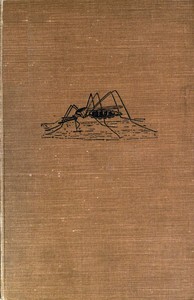
Read on Project GutenbergJean-Henri Fabre's Social Life in the Insect World opens with a detailed account of the praying mantis, describing its predatory stance as 'the attitude of prayer' and its 'spectral' pose. The frontispiece alone captures five distinct mantis behaviors, including a duel between females and the female devouring her mate. Fabre's method is to watch closely and experiment, as when he tests whether honey is repugnant to the carnivorous larvae of the bee-hunter Philanthus. He smears dead bees with honey and observes the larvae's refusal, concluding that honey is either poisonous or repellent to them. This blend of patient observation and controlled experiment defines the work.
The Mantis: Predator and Mate
Fabre devotes multiple chapters to the mantis, illustrating its hunting techniques and reproductive habits. He describes the female's consumption of the male during courtship, a behavior captured in the frontispiece. The mantis's nest is also examined in detail, with illustrations showing transverse and vertical sections. Fabre's language is precise: he notes the mantis's 'attitude of prayer' and its 'spectral' appearance, emphasizing the insect's dual nature as both a patient hunter and a ruthless cannibal. The chapter titles—'The Chase,' 'Courtship,' 'The Nest'—indicate a systematic approach to understanding each phase of the mantis's life.
Cicada Life and the Ant Fable
Fabre revisits the fable of the cicada and the ant, using his observations to challenge the traditional moral. He notes that during summer droughts, 'thirsting insects, and notably the ant, flock to the drinking-places of the cigale' (the cicada). The cicada's song, its burrow emergence, and egg-laying are each given separate chapters. Fabre's illustrations show the cicada laying eggs and the green grasshopper devouring a cicada, highlighting the real interactions between species. He does not simply repeat the fable but examines the actual behaviors, finding that the ant is often the aggressor, not the industrious worker of lore.
Experiments with Carnivorous Larvae
In the chapter on the bee-hunter Philanthus, Fabre conducts feeding experiments to determine the dietary preferences of its larvae. He offers them freshly killed bees that have fed on nectar, but the larvae languish and die. Suspecting honey as the cause, he smears dead bees with honey and observes the larvae's immediate disgust: 'The grub, having bitten on the honeyed bee, draws back as though disgusted.' Fabre extends the experiment to other carnivorous larvae, noting that not all are equally suited to his method. He rejects larvae that feed on a single prey, as interrupting them would be 'doubly objectionable.' These controlled tests reveal the larvae's strict carnivory and the toxicity of honey to them.
Fabre's work is best approached as a series of discrete investigations rather than a unified narrative. Readers interested in experimental methods will find the Philanthus chapter particularly instructive, while those drawn to natural history will appreciate the detailed observations of mantis and cicada. The illustrations, though few, are integral to understanding the behaviors described. Fabre's voice is that of a curious naturalist, willing to challenge received wisdom through direct observation and simple but effective experiments.
Fabre’s mantis, so still and watchful, made me think of how I used to lie in the meadow grass, turning over stones just to see who lived beneath. His patience feels like a shared secret. That quiet curiosity found an echo in Our Common Insects A Popular Account of the Insects of Our Fields, Forests, Gardens and Houses — Key Ideas to Explore, which reads like a familiar field notebook.
There are no reviews for this eBook.
There are no comments for this eBook.
Reader reflection
Record your reading impressions
A brief reflection can help important ideas stay with you longer.
Your progress
0
/
10
2
Was reading this book enjoyable?
3
Would you recommend this book to another reader?
4
What was the reading difficulty like?
5
Is this a title worth rereading?
6
How clear did the writing feel?
7
How useful were the ideas in this book?
8
Did you relate to its people, ideas, or situations?
9
What did this book teach you most?
10