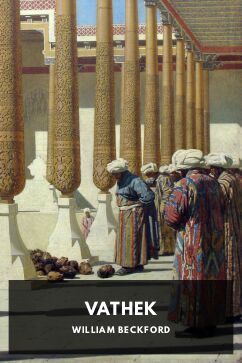
Vathek - William Beckford
Let's get one thing straight: Vathek is not a comforting bedtime story. Published in 1786 by the outrageously wealthy William Beckford, it reads like a gothic fantasy that got lost on its way to the 19th century and decided to have a very strange, very dark party in an imagined Middle East.
The Story
The Caliph Vathek has it all: a vast empire, endless wealth, and a palace of unimaginable luxury. But he’s bored. His curiosity is twisted toward the occult and the supernatural. When a hideous, otherworldly stranger called the Giaour arrives offering secrets of ultimate power, Vathek is hooked. The price? He must renounce his faith and perform a series of increasingly terrible acts. Driven by his own pride and egged on by his scheming mother, Carathis (a real piece of work who conducts rituals in a tower full of mummies and magical potions), Vathek embarks on a pilgrimage to the mythical ruins of Istakhar. He’s chasing the promise of treasures and power from the pre-Adamite kings. Along the way, he drags the innocent Nouronihar, his bride-to-be, into his damnation. The journey is a parade of horrors—cursed locations, ghostly visions, and a growing sense that the prize might not be worth the cost.
Why You Should Read It
Forget noble heroes. Vathek is a fantastic, petulant villain-protagonist. Reading his story is like watching a slow-motion train wreck where the conductor is actively throwing coal on the fire to go faster. Beckford’s imagination is utterly unhinged in the best way. He builds a world that feels opulent and rotten at the same time. The book isn’t scary in a jump-scare way; it’s creepy and atmospheric, filled with a sense of profound wrongness. It’s also surprisingly funny in a very dark, satirical vein. Beckford is poking fun at ambition, materialism, and the folly of chasing empty knowledge. You’re not meant to root for Vathek—you’re meant to be fascinated by the depths of his folly.
Final Verdict
This book is a hidden gem for readers who find classic novels sometimes too polite. It’s perfect for fans of gothic literature who want to see where the genre’s obsession with anti-heroes and sublime terror started. If you enjoy the moral darkness of Paradise Lost, the atmosphere of early Poe, or the epic strangeness of Arabian Nights, you’ll find a kindred spirit in Vathek. Just don’t expect a happy ending. Beckford serves up a finale in the halls of Eblis (hell) that is one of the most chilling and iconic images in all of gothic fiction. It’s a short, potent shot of decadent horror.
This publication is available for unrestricted use. Enjoy reading and sharing without restrictions.