
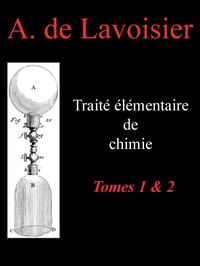
Traité élémentaire de chimie, tomes 1 & 2 by Antoine Laurent Lavoisier
Let's be clear: this is not a novel. There's no protagonist in the traditional sense, unless you count Lavoisier himself, and the 'plot' is the systematic dismantling of alchemy and its replacement with a rational, measurable science. The book is structured as a manifesto and a manual. Lavoisier first lays out his new system, introducing concepts like elements, compounds, and his law of conservation of mass (matter isn't created or destroyed, just rearranged). Then, he walks you through his experiments, often step-by-step, showing how he proved that air is a mixture of gases and that combustion and respiration are fundamentally the same process involving oxygen.
Why You Should Read It
You read this for the sheer audacity of it. Lavoisier is so confident and clear. He's not just reporting facts; he's building a new language from the ground up and inviting you to see the world through his eyes. The thrill comes from witnessing a foundational moment. When he describes weighing a sealed container before and after heating tin, proving the metal gained weight by combining with air, it's a quiet 'eureka' moment. You're seeing the birth of the controlled experiment. It's also surprisingly human. His frustration with the old, muddled names for substances is palpable, and his push for a clear, logical naming system feels like a battle for common sense.
Final Verdict
This book is perfect for curious minds who love 'origin stories'—whether of ideas, sciences, or revolutions. It's for the reader who enjoyed The Age of Wonder or gets a kick out of historical documentaries. You don't need a chemistry degree; you just need patience and a sense of wonder for how we figured out the basic rules of our physical world. It's a slow, thoughtful read, but finishing it leaves you with a profound appreciation for how one brilliant, methodical mind can change everything. It's the blueprint for the modern world, written in real time.
The copyright for this book has expired, making it public property. It is now common property for all to enjoy.
Oliver Wilson
1 year agoA bit long but worth it.
David Harris
1 year agoRead this on my tablet, looks great.
Anthony Anderson
1 year agoAfter finishing this book, the character development leaves a lasting impact. Don't hesitate to start reading.
Noah Miller
8 months agoI had low expectations initially, however the atmosphere created is totally immersive. Truly inspiring.
Amanda Lee
8 months agoComprehensive and well-researched.