
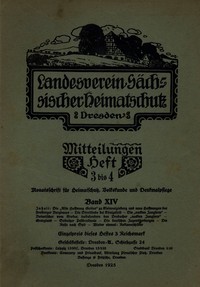
Landesverein Sächsischer Heimatschutz — Mitteilungen Band XIV, Heft 3-4…
Let's be clear from the start: this is not a book with a plot. There are no characters, in the traditional sense. 'Mitteilungen Band XIV, Heft 3-4' is a journal, a collection of reports and essays published in 1935 by the Saxon Heritage Protection Society. Think of it as the blog or newsletter of its day, but printed on thick, slightly yellowed paper. The 'story' it tells is the ongoing, quiet work of a group of people trying to hold onto something they felt was slipping away.
The Story
The journal is a mix of things. One article might detail the correct way to restore a half-timbered farmhouse in the Erzgebirge region. Another passionately argues for the collection of regional folk tales before they're forgotten. There are lists of historically significant buildings, notes on local flora, and reports from various county chapters. The unifying thread is a deep, almost anxious love for Saxon landscape, culture, and craftsmanship. The writers are documenting, measuring, and pleading for preservation against the tide of modernization. The narrative is one of careful, scholarly conservation.
Why You Should Read It
This is where it gets interesting. Reading this journal is an exercise in dramatic irony. You know what the writers don't: that the Nazi regime had already been in power for two years. The concept of 'Heimat' (homeland) they cherished was being co-opted for a terrifying nationalistic project. Yet here, in these pages, that political reality is almost entirely absent. The focus is on the local, the specific, the authentically old. It creates a powerful and unsettling disconnect. You see people trying to save the soul of a place, utterly unaware of the cataclysm about to reshape it. It makes their careful work feel both noble and heartbreakingly fragile. It turns a dry academic journal into a poignant human document.
Final Verdict
This is a niche read, but a powerful one for the right person. Perfect for history buffs, especially those interested in the everyday life and culture of the 1930s, or in how heritage movements function. It's also fascinating for anyone who thinks about how we remember the past, and how ordinary passions exist in the shadow of world-changing events. It’s not a page-turner; it’s a slow, thoughtful look into a world that was diligently recording its own footsteps, right before the path disappeared. If you're curious about history from the ground up, not from the top down, this forgotten journal offers a unique and strangely moving perspective.
You are viewing a work that belongs to the global public domain. Preserving history for future generations.
Mark Davis
1 year agoSimply put, the depth of research presented here is truly commendable. I couldn't put it down.
Amanda Johnson
1 year agoSurprisingly enough, the arguments are well-supported by credible references. I learned so much from this.
Carol Moore
5 months agoA bit long but worth it.
Charles Clark
11 months agoCompatible with my e-reader, thanks.








Andrew Martin
1 year agoSimply put, the storytelling feels authentic and emotionally grounded. One of the best books I've read this year.